Blog > Flagler Beach Airbnb and Short-Term Rental Investment Guide: What the Numbers Say in 2026
Flagler Beach Airbnb and Short-Term Rental Investment Guide: What the Numbers Say in 2026
by
Flagler Beach Airbnb and Short-Term Rental Investment Guide: What the Numbers Say in 2026
By The Landmark Group at Compass | June 2026 | Last Updated: June 23, 2026 | 11 min read
If you're researching a short-term rental investment in Flagler Beach, FL, the data is more interesting than the headlines suggest. Average Airbnb revenue in Flagler Beach is running around $35,000 per year with nightly rates of $298-$319 - not bad for a small beach town with fewer than 200 active STR listings. But the number that really sets Flagler Beach apart from every other Florida beach town isn't the revenue. It's the regulations. And if you're an investor, that distinction could be worth more than a few thousand dollars a year.
This guide breaks down exactly what short-term rental investing looks like in Flagler Beach in 2026 - the actual numbers, the regulatory landscape, the best property types, and the honest risks you need to factor in before you make an offer.
What Makes Flagler Beach a Strong STR Market
Flagler Beach is not Destin. It's not St. Pete Beach. That's exactly the point.
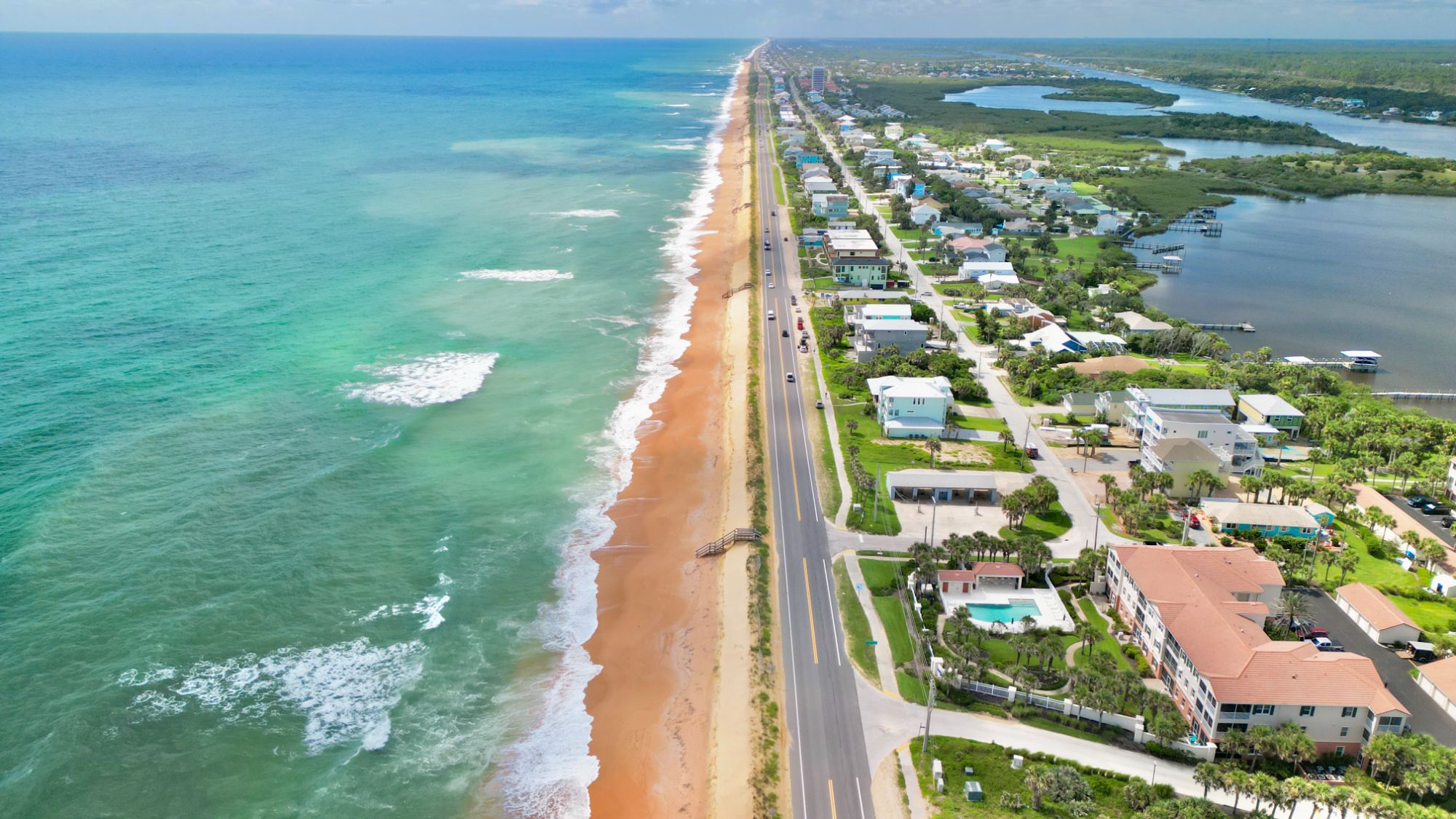
It's a small, authentically "Old Florida" beach town on A1A with a six-block-wide barrier island, a working fishing pier, and a local vibe that vacation rental guests actively seek out and pay a premium for. The town has no high-rise condos, no strip malls on the beach, no chain hotels crowding the shoreline. What it has is about 197 active short-term rental listings competing for guests who specifically don't want what the bigger Florida beach markets offer.
Limited supply plus consistent demand is the foundation of any strong rental market. In Flagler Beach, that equation works in investors' favor - and the regulatory environment, which we'll get to shortly, keeps that supply from exploding the way it has in markets like Orlando, Kissimmee, and parts of the Panhandle.
Peak tourism season runs May through August when beach demand is highest. A secondary shoulder season runs October through early January as snowbirds arrive and "remote work from the beach" guests book extended stays. Year-round demand is real - it's just uneven, which is normal for any coastal market.
The Numbers: What Flagler Beach Airbnbs Actually Earn
Before we get into strategy, here's what AirROI and AirDNA's Flagler Beach market data currently show for active STR properties in Flagler Beach:
Average Annual Revenue
The average gross annual revenue for an active Flagler Beach Airbnb is approximately $35,000-$35,436. That's gross - before mortgage, insurance, management fees, taxes, and maintenance. Net returns vary significantly based on your purchase price and carrying costs, which we break down in the risks section below.
Average Daily Rate
Nightly rates currently average $298-$319 across active listings. Premium properties - beachside bungalows, canal homes with dock or boat access, properties with private pools - push well above that average, particularly during peak weeks in June and July when rates can climb to $400-$600 per night for well-positioned homes.
Occupancy Rate
Active Flagler Beach STRs are running between 41% and 52% annual occupancy depending on the source and property type. That translates to roughly 150-190 nights booked per year on average. Entire home listings - which make up 96.4% of the Flagler Beach STR market - tend to perform at the higher end of that range.
What's Working Best
The market is almost entirely entire-home rentals. Houses are the most common property type at 48.2% of listings. Properties that consistently outperform the averages share a few traits: they're within walking distance of the beach or have water access, they sleep 6-8 guests (family groups drive summer demand), and they have outdoor living space - a screened porch, fire pit, or private pool pushes both occupancy and rate.
STR Regulations: The Grandfathered Advantage
This is the part most investors miss, and it might be the most important section in this guide.
Florida has been a battleground over short-term rental regulations for the better part of a decade. State preemption laws, local ordinance battles, outright bans in some municipalities - the regulatory uncertainty has made STR investing in many Florida markets a genuine risk. Flagler Beach is different, and it's different in a very specific way.
The 2008 Ordinance That Changes Everything
Flagler Beach passed its STR ordinance in 2008 - well before the Airbnb era, before the state preemption battles, before short-term rentals became a political flashpoint. That timing matters because the city's ordinance is grandfathered in a way that has protected it from many of the state preemption challenges that have disrupted STR markets in other Florida communities.
What that means practically: short-term rentals are explicitly permitted in Flagler Beach, the regulatory framework is established and stable, and investors have clarity that is genuinely rare in coastal Florida right now. You're not buying into a market where a city commission vote next year could upend your entire investment thesis.
What Permits You Actually Need
Operating a legal STR in Flagler Beach requires two separate approvals. According to STR Profit Map's Flagler Beach regulation guide:
1. City of Flagler Beach Resort Dwelling/Condo Rental Permit. This is the city-level permit required for any property rented on a short-term basis within Flagler Beach city limits. It must be renewed and kept current.
2. Flagler County Short-Term Vacation Rental (STVR) Certificate. Even for properties within the city, Flagler County requires a separate county-level STVR certificate. Both must be in place before you list and accept bookings.
Operating without these permits risks fines and forced removal of your listing. Get them in order before your first guest checks in, not after.
Best Property Types for STR Success in Flagler Beach
Not every property in Flagler Beach performs equally as a short-term rental. After working with buyers and investors in this market, here's what we see actually driving above-average returns:
Beachside Bungalows on or Near A1A
Single-family homes and cottages within a short walk of the beach are the market's consistent top performers. Guests booking Flagler Beach are specifically choosing it over larger resort destinations for the small-town, walkable-to-the-beach experience. A property that delivers that within a one or two-block walk commands both a rate premium and higher occupancy than anything that requires driving to the beach.
Canal Homes with Boat Access
Flagler Beach and the surrounding Flagler County area have extensive saltwater canal systems with direct Intracoastal Waterway access. A canal home with a dock, boat lift, or direct water access appeals to an entirely different and higher-spending guest segment: boating and fishing families who specifically need water access and will pay significantly more for it. These properties also tend to hold value better as long-term investments.
Properties with Outdoor Living Space
Private pools, screened lanais, outdoor kitchens, and fire pits consistently translate to higher nightly rates and five-star reviews that drive long-term occupancy. In Florida's climate, outdoor space is year-round usable and guests factor it heavily into their booking decisions.
The Honest Risks to Know Before You Buy
We'd be doing you a disservice if we stopped at the revenue numbers without walking through the real costs and risks. STR investing in a coastal Florida market looks different on paper than it does in practice.
Insurance: The Number That Changes Everything
Florida coastal homeowners insurance is expensive, and short-term rental properties often carry higher premiums than owner-occupied homes because of increased liability exposure and usage patterns. Budget $3,000-$6,000 per year minimum for homeowners insurance on a typical Flagler Beach investment property, more for oceanfront or older construction. Add $800-$2,500 for separate flood insurance - required for most financed properties in flood zones, and a large portion of Flagler Beach properties are in FEMA-designated flood zones. Run the full insurance cost before you model your return, not after.
Management Fees
If you're not local, plan to use a professional property manager. Management fees in the Flagler Beach/Palm Coast area typically run 20-30% of gross revenue. On $35,000 gross, that's $7,000-$10,500 off the top before you've paid a single utility bill or replaced a mattress. Remote STR ownership is absolutely viable - just make sure your numbers account for it honestly.
Occupancy Is Not Guaranteed
The averages are averages. A new listing with no reviews, mediocre photos, or inconsistent pricing strategy will sit empty while a nearby competitor with better presentation stays booked. The STR market is a hospitality business and it rewards hosts who treat it like one. Your return in year one will likely be lower than your return in year three, once reviews are established and your listing has search history.
Carrying Costs During Off-Season
Even at 52% occupancy, nearly half the year your mortgage, insurance, utilities, and HOA (if applicable) are running with no rental income offsetting them. Make sure your reserve budget covers the slow months without stress.
Is Now the Right Time to Buy a Flagler Beach Investment Property?
From a pure buyer's market standpoint, 2026 is one of the better buying windows we've seen in Flagler Beach in several years. Home prices are down from 2022-2023 peaks, homes are sitting on the market an average of 121 days (up from 54 a year ago), and sellers are negotiating in ways they weren't during the frenzy years. For an investor buying on fundamentals, paying less for the asset directly improves your cap rate from day one.
The investors who succeed in this market share one trait: they run conservative numbers. They use actual insurance quotes, not estimates. They model 40% occupancy, not 55%. They budget for a property manager. And they buy properties with genuine appeal - beach proximity, water access, outdoor space - rather than hoping average properties will perform above average.
If you want to look at specific Flagler Beach properties with investment potential, or want help understanding what a realistic return model looks like for a property you're considering, reach out to The Landmark Group at Compass at (386) 338-3908 or visit landmarkgroupfla.com. We work with both primary residence buyers and investors in this market and can help you run the real numbers before you commit.
Frequently Asked Questions About Flagler Beach Short-Term Rentals
How much can you make on Airbnb in Flagler Beach FL?
The average Flagler Beach Airbnb earns approximately $35,000 per year in gross revenue, with nightly rates of $298-$319 and occupancy between 41% and 52%. Top-performing beachside properties and canal homes with boat access regularly exceed these averages, particularly during peak season from May through August.
Are short-term rentals legal in Flagler Beach FL?
Yes. Short-term rentals are explicitly legal in Flagler Beach under a grandfathered 2008 ordinance. Hosts need a city-issued Resort Dwelling/Condo Rental Permit and a separate Flagler County Short-Term Vacation Rental (STVR) certificate. Both must be active before accepting any bookings.
What is the best type of property to buy for Airbnb in Flagler Beach?
Beachside bungalows within walking distance of the ocean and canal homes with dock or boat access to the Intracoastal Waterway consistently outperform the market average. Properties sleeping 6-8 guests with outdoor living space (pool, screened porch, fire pit) command the highest nightly rates and occupancy, especially for family bookings during peak summer months.
What permits do I need to run an Airbnb in Flagler Beach?
Two permits are required: a Resort Dwelling/Condo Rental Permit from the City of Flagler Beach, and a Short-Term Vacation Rental (STVR) certificate from Flagler County. Both must be obtained and kept current before listing or renting your property. Operating without them can result in fines and forced delisting.
Is Flagler Beach a good place to invest in rental property in 2026?
For investors who model conservative numbers and account for full carrying costs, Flagler Beach offers a genuinely solid STR opportunity in 2026. Prices are off their peak, the protected grandfathered STR ordinance provides regulatory stability that most Florida beach towns no longer offer, and limited active inventory keeps competition manageable compared to oversaturated markets.